A New Approach to Accelerating ETCS Driver Training
Graduated learning to build trust and confidence in ETCS
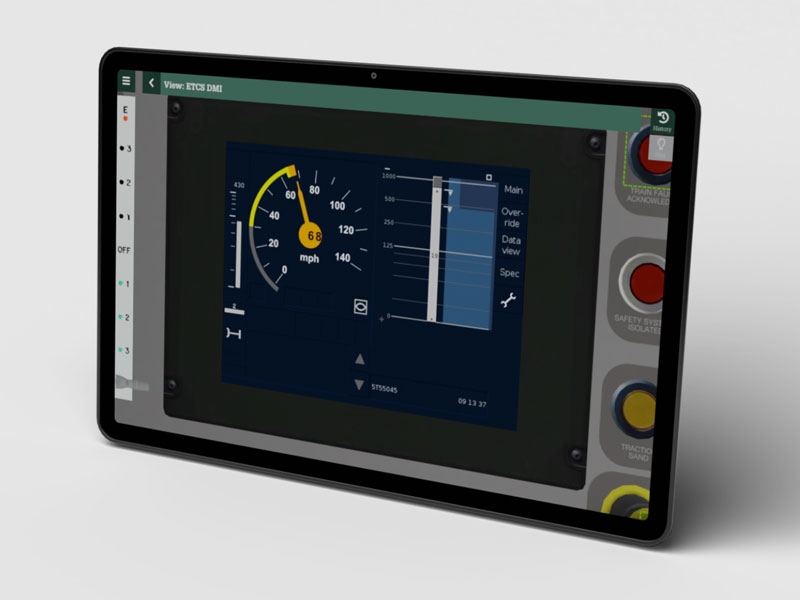
One of the biggest challenges facing the global rail industry is the introduction of the European Train Control System (ETCS), a digital, in-cab signalling and train protection system that continuously supervises a train’s speed and movement authority. It replaces traditional lineside signals with real-time information transferred from track equipment to the driver via a Driver-Machine Interface (DMI). It is a major change to what a driver will see and do as part of their job.
The benefits of ETCS are considerable including enabling safer, more consistent train operation, supporting higher capacity and interoperability across the rail network; however as ETCS moves from infrastructure to operational deployment, the challenge for the industry is no longer delivering the technology, but building confident driver competence at scale.
ETCS changes not just what a driver will see, but how they will think and act, and that introduces a significant human factors risk, with cognitive overload, unfamiliar system behaviour, and reduced confidence, particularly during early exposure.
Train operators can mitigate this risk by bridging the training gap between classroom and cab with tablet simulators designed to provide a consistent introduction to the ETCS DMI and its initial procedures through scenario based learning.
A New Approach to Practise
ETCS is a large-scale change to driving and as such requires a graduated learning approach that enables drivers to build trust and confidence in the system before exposure to live ETCS operations. If a cab simulator is the best possible rehearsal for driving a train, then everything before that is practice, and that’s where ETCS tablet simulators can accelerate competence development.
Tablet simulators are a force multiplier in driver training. They ensure every driver receives the same core system understanding and make cab simulator time more productive. They accelerate practice, support ongoing skill retention, and provide evidence-based insight into learning gaps. Already in use with train operators and trainers including GWR and TfW in the UK and TRAINing in Italy, tablet simulators are becoming an essential part of delivering successful ETCS driver training.
LATEST UPDATES